Fr. Jackson's Commentary & Notes
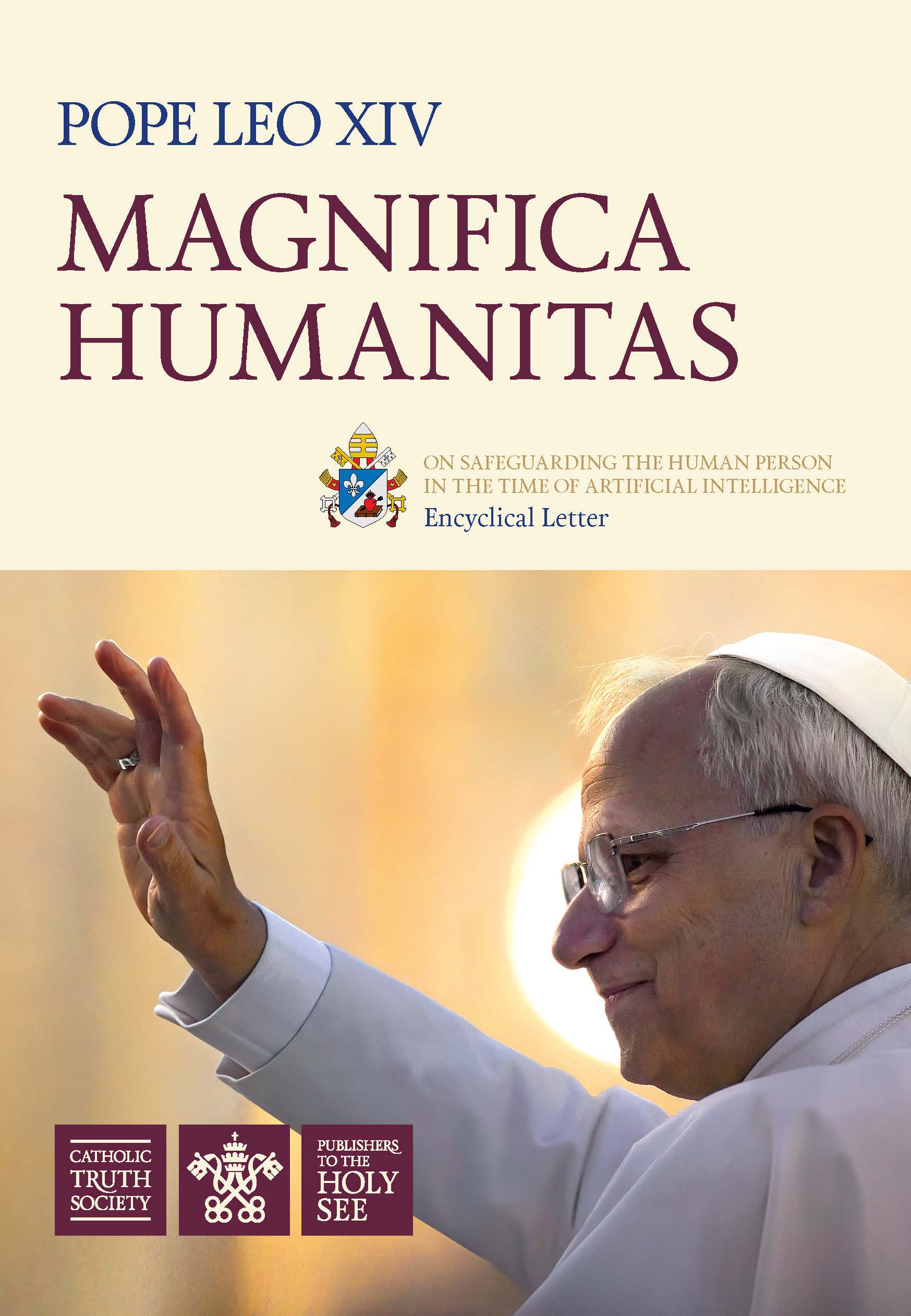
Reading through Pope Leo XIV’s recent encyclical, Magnifica Humanitas (published in May 2026), feels less like reading a rigid theological textbook and more like receiving an urgent, compassionate letter from a mentor who sees exactly where our world is heading.
The subtitle alone—On Safeguarding the Human Person in the Time of Artificial Intelligence—shows how deeply the Church is trying to engage with our current era.
The Danger of the "Optimized" Human
One of the most striking points in the encyclical is Pope Leo XIV's warning against the technocratic paradigm—a fancy term for a mindset that views everything, including human beings, through the lens of efficiency, power, and constant technical upgrades.
It is incredibly easy to fall into the trap of viewing oneself as an algorithm or a project that needs constant optimization. We track our sleep, optimize our workflows, and try to maximize our daily productivity. But Magnifica Humanitas gently pushes back on this, reminding us that no machine can replace the God-given magnificence of a human soul.
The Pope points out something beautifully counterintuitive: our human limits—like vulnerability, illness, and aging—are not "bugs" or defects that technology needs to patch. Instead, it is often through our weaknesses and our reliance on one another that we learn how to love, show empathy, and build genuine community. A perfectly optimized machine cannot love, because it has nothing to lose; humans love precisely because we are vulnerable.
Disarming the Digital Space
Another element that leaves a strong impression is the Pope’s bold call to "disarm AI," especially when it comes to autonomous weapons systems and the spread of digital misinformation.
Living in a world saturated with deepfakes and algorithmic echo chambers, it is easy to feel a sense of digital fatigue or social distrust. The encyclical challenges us not to leave these massive ethical decisions solely to "tech elites." It calls on regular citizens, developers, and governments to actively protect truth and human dignity. It reminds us that while an algorithm can process data at lightning speed, it lacks a conscience—the inner moral compass required to discern right from wrong.
Final Takeaway: Weavers of Hope
Ultimately, Magnifica Humanitas doesn't condemn artificial intelligence; it simply refuses to let technology become our master. The document closes with a beautiful image, inviting us to become "weavers of hope". In an age where it is easy to feel small next to massive computational systems, this encyclical is a refreshing reminder of our own quiet grandeur. It challenges us to use tools to serve people, rather than using people to serve tools.